Thursday, April 18, 2013

A fine line between code inspector and a home inspector....my daily problem


When builders use the old excuse of “the city already approved it” they end up looking like weasels. Everyone knows that municipal building inspectors can’t possibly catch every little defect; no one can. When a municipal inspector approves a permit, it means they didn’t find any defects; it doesn’t mean they’re putting their blessing on something that was done wrong. When a builder tries to talk a home buyer out of having a home inspection done, it’s a huge red flag for the home buyer and the home inspector.
Builders should welcome a home inspection. If the home buyer is nervous about the quality of construction, this is a perfect opportunity for the buyer’s fears to be assuaged. If the home is truly well built, a good home inspector will say so. While there may be a handful of overly zealous, hyper-critical home inspectors, most of us aren’t. Most home inspectors appreciate neat work and best practices, and we love pointing this stuff out to clients.
 
A home inspection is a PR opportunity for the builder. If the home inspector comes up with a list of construction defects, the builder has a golden opportunity to fix the issues with a smile. This creates trust and goodwill with the buyer, which can lead to referrals.
When a builder welcomes a home inspection, they’re telling the home buyer that they’re confident in their work. This concept seems obvious to me, but only the best builders seem to understand this.

Saturday, October 27, 2012

Mortgage rates hit record low again

NEW YORK (CNNMoney) -- Mortgage rates fell to a new record low after the Federal Reserve's decision to buy billions in home loans continued to ease costs for home owners and buyers.
The average 30-year fixed-rate mortgage fell to an all-time low of 3.36%, according to a weekly survey by mortgage finance backer Freddie Mac. The rate dropped from 3.40% the previous week.
The fixed-rate 15-year mortgage also hit a new record low of 2.69% from 2.73% a week earlier.
Rates have been falling to news lows since the Fed announced last month that it would buy $40 billion in mortgage-backed securities each month. The central bank hopes that keeping interest rates low through this policy, known as quantitative easing, will fuel home buying, which will lead to more spending, and eventually more hiring.

Economists are betting that low mortgage rates would give home buyers the confidence to pay more for homes. Already, home prices have rebounded to the same level they were nine years ago.
There's also been a pick-up in sales of existing homes, a leap in new home sales prices , and an increase in home construction, all of which have invigorated the housing market.
Economists surveyed by CNNMoney said they are encouraged by the reports and believe that the nation's housing market has finally turned a corner.
Of the 14 economists who answered questions about home prices in the survey, nine believed that prices have already turned higher or will make that turn later this year. Only three months ago, half of the economists surveyed by CNNMoney believed a turnaround in prices would not take place until 2013 or later.

@CNNMoneyOctober 4, 2012: 11:03 AM ET    

Did You Know... 6 Facts about Clothes Dryer Exhaust Safety

  1. According to manufacturer’s specifications and local codes, dryer ducts must be a minimum of 4 inches in diameter and at least as large as the dryer outlet.
  2. Unless otherwise specified by the dryer’s manufacturer or local code, the developed length of the dryer’s exhaust duct should not exceed 25 feet. (When determining developed length, each 90 degree turn adds 5 feet to the actual length.)
  3. Dryer vents shall be independent of all other systems and terminate outdoors, not into a chimney, crawl space, or attic.
  4. The outside dryer exhaust vent’s termination hood should be equipped with a back draft damper to ensure that the exhaust doesn’t come back into the home.
  5. Metal transition ducts should be used between the dryer and the exhaust duct.
  6. Flexible transition ducts should never be used in an attic, a crawl space, or inside a wall.
Information provided by the Chimney Safety Institute of America (CSIA) Public Safety Bulletin

Water Heaters That Are Installed in Garages

You may live in an area of the country where the majority of water heaters are located in the garage. It is acceptable to have water heaters in the garage but there are some things that you need to be aware of. The authority on determining what the requirements are for residential water heater installation and safety is the ICC (International Code Council). The following information is taken from the 2009 International Residential Code (IRC) section P2801.6 and P2803.6.1 commentary.
Water heaters having an ignition source shall be elevated so that the source of ignition is not less than 18” above the garage floor. An ignition source could be many things, including an open flame, electrical switch, open resistance heating coils, or an electrical igniter unit. Residential garages have a high potential for volatile liquids, such as gasoline and paint thinners that can spill or leak from their containers. Because the vapors from these liquids are heavier than air, they concentrate just above floor level, posing an explosion hazard in garages with a water heater.
Many electric water heater thermostats have enclosed contacts, but they are not sealed gas tight. Therefore, if an electric water heater with an ignition source located less than 18” from the bottom of the unit, it is required that the unit be elevated so the ignition source (thermostat) is at least 18” above the garage floor. Electric water heaters having all switching controls located above 18” from the bottom of the water heater are not required to be elevated.
Gas-fired appliances have to meet the elevation requirement for elevation above the garage floor, but have an exception to allow gas-fired appliances having flammable vapor ignition resistant (FVIR) design to be installed without elevating the unit.

Friday, October 12, 2012

Why the relief valve at the water heater is leaking, and what to do about it

When a temperature and pressure (T&P) relief valve at a water heater leaks, it’s usually a simple fix; just replace the valve. These valves cost less than $15, and replacing the valve is a very basic job – just drain some water out of the water heater, remove the discharge tube, and replace the valve. No big deal.
Unless it starts leaking again.
If a recently replaced T&P relief valve starts leaking again, it probably means that the relief valve is only doing it’s job; it relieving excess pressure in the water heater. When this happens, the fix gets a little bit more involved. I’ll explain.
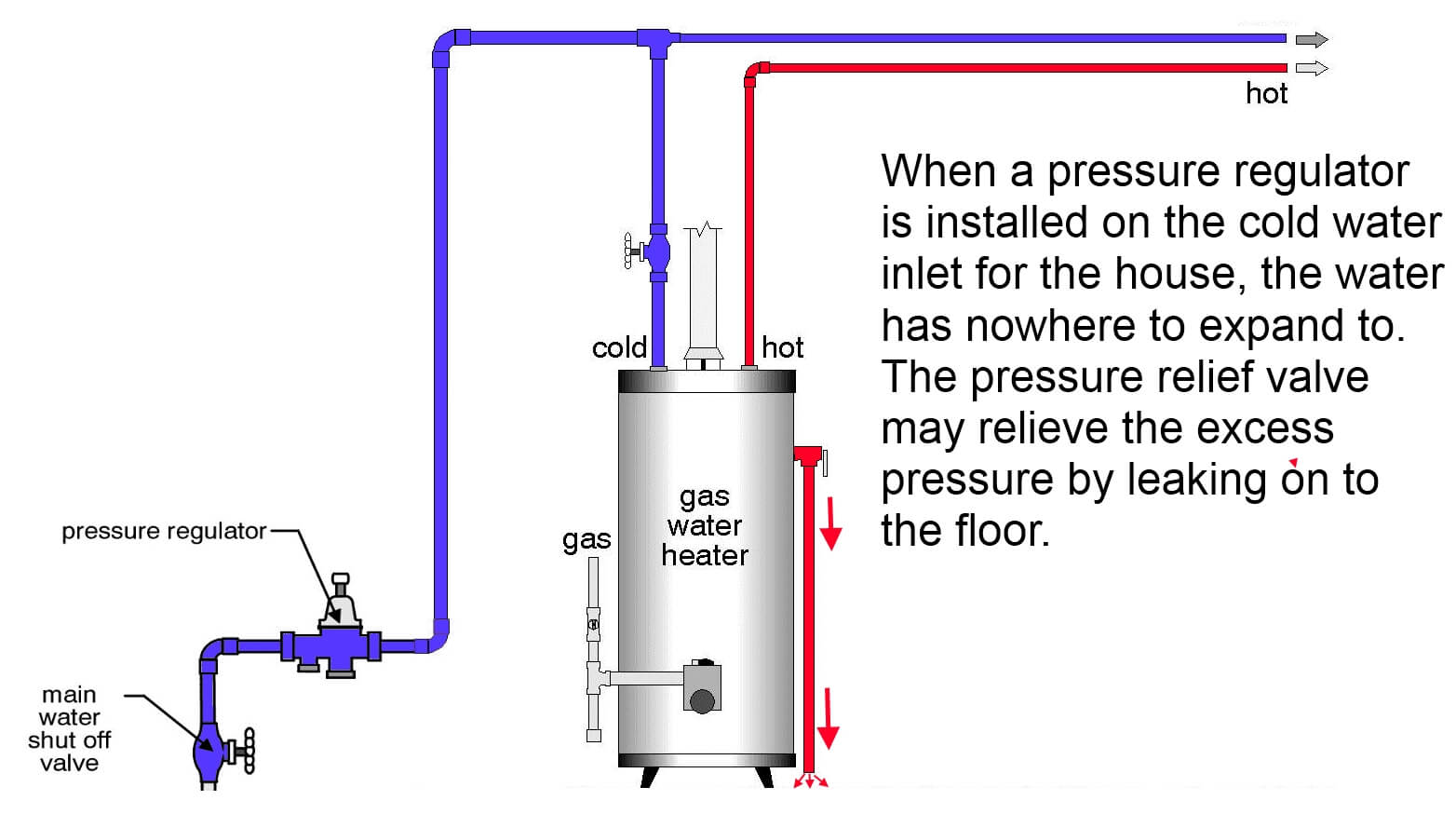
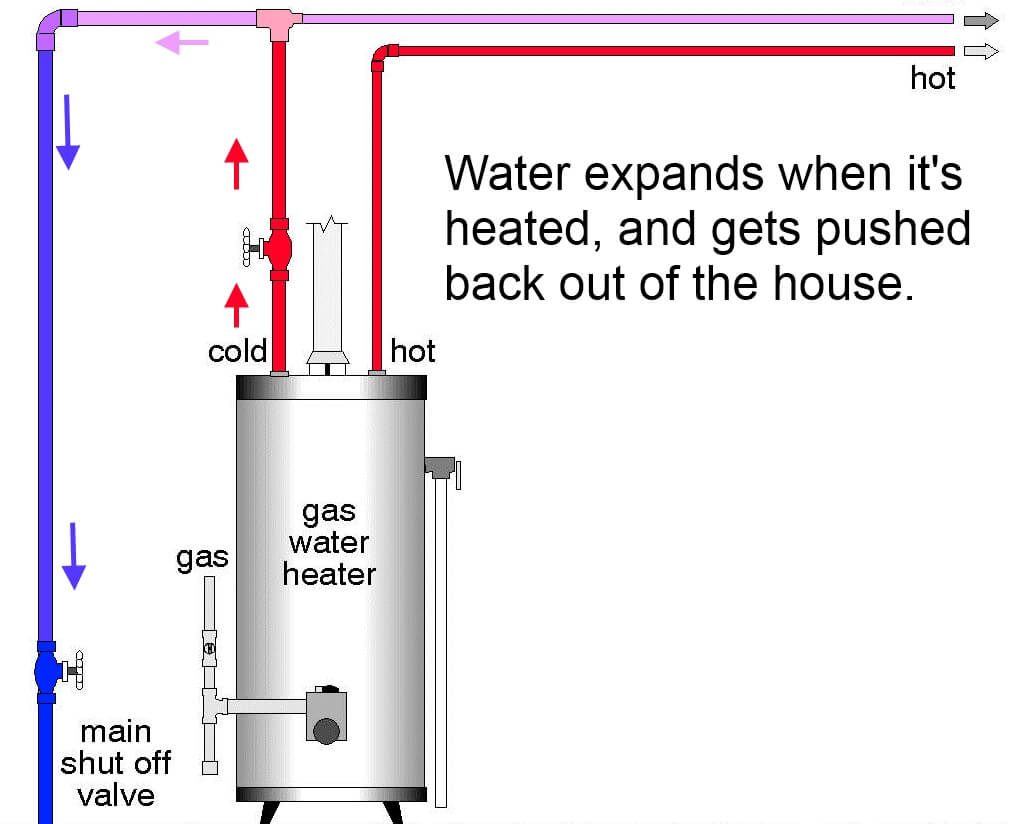
When a water heater heats up the water in the tank, the water expands. When this happens, the water typically ends up expanding back out the cold water inlet, all the way back to the water supply coming in to the house. The municipal water supply for the house acts as a gigantic expansion tank… and nobody notices. This is illustrated in the diagram below.
Natural expansion
What would happen if a one-way valve, or check valve, was installed on the water supply piping for the house? The water wouldn’t have anywhere to go. As the water heater heats the water, it expands, which builds up pressure in what is now essentially a closed system. When the pressure builds up enough, the T&P relief valve on the water heater just does it’s job and relieves the excess pressure by leaking a little water.
Pressure regulator prevents expansion
In Minnesota it’s rare for a check valve to be installed on the water supply line for the house, but it’s fairly common to have a pressure regulator installed. When the pressure from the water supply coming in to a house is too high, a pressure regulator needs to be installed on the water main, to prevent damage to the plumbing components in the house. The problem that these regulators can create is that they will act as a check valve; they’ll allow water in to the home, but they won’t allow water back out. This creates what is called a ‘closed system’.
When this happens, the T&P relief valve for the water heater can leak. This doesn’t happen every time a pressure reducing valve is installed, but there may be other problems that show up in the house, such as the toilet fill valves randomly re-filling toilets, or faucets chronically dripping.
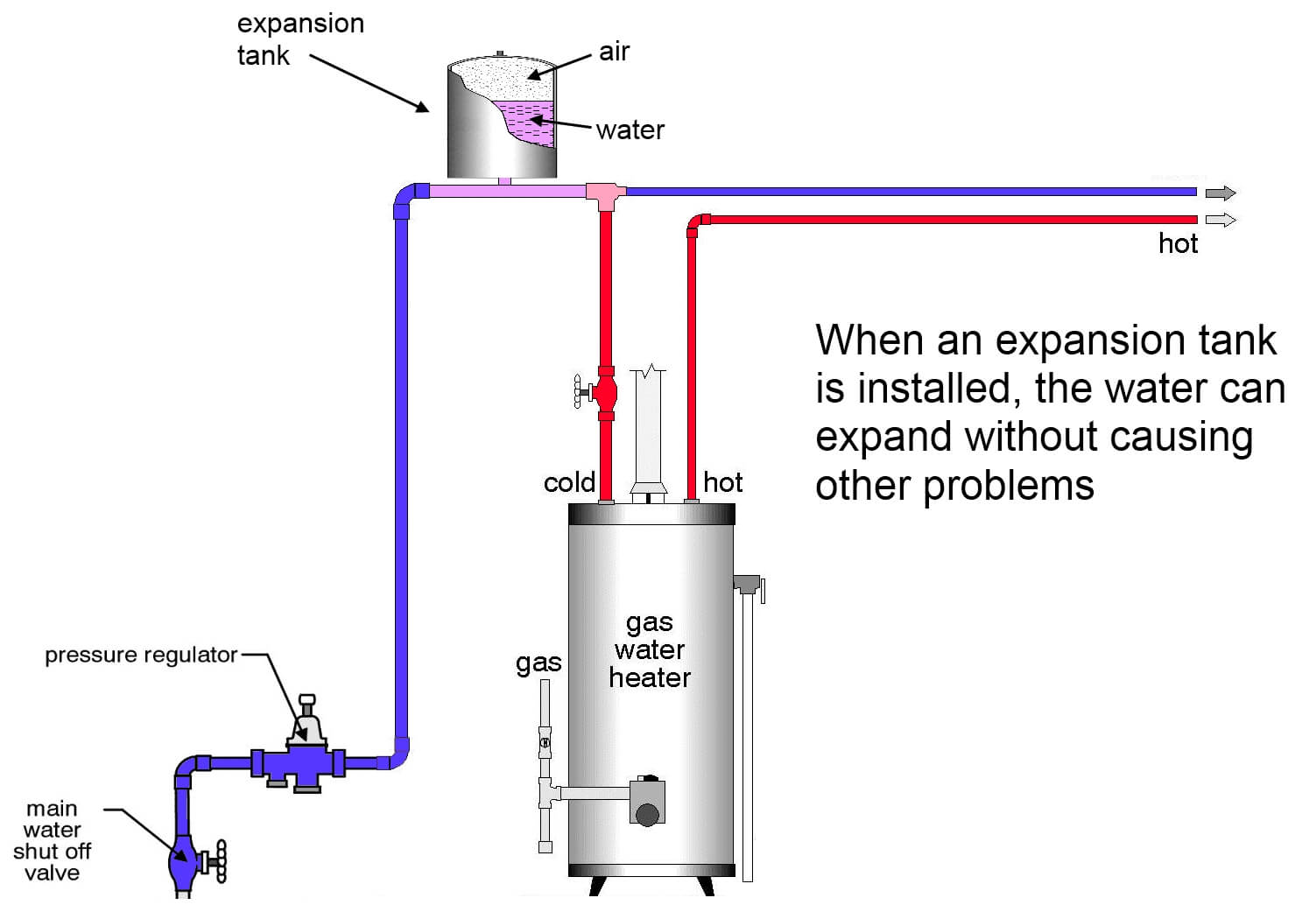
The Fix When a closed system exists on the water distribution piping in a home, an expansion tank needs to be installed somewhere on the plumbing system. This is a fairly simple and straightforward fix; an expansion tank will give the water somewhere to go when it expands, and the T&P relief valve on the water heater will stop causing problems.
Expansion tank installed
This rule also applies to hot water heating systems; when a boiler heats the water in a hydronic heating system, the expansion tank allows for the water to expand without the pressure relief valve leaking. If the pressure relief valve on a boiler system chronically leaks, even after replacement, it probably means there is a problem with the expansion tank.

Plumbing Trap

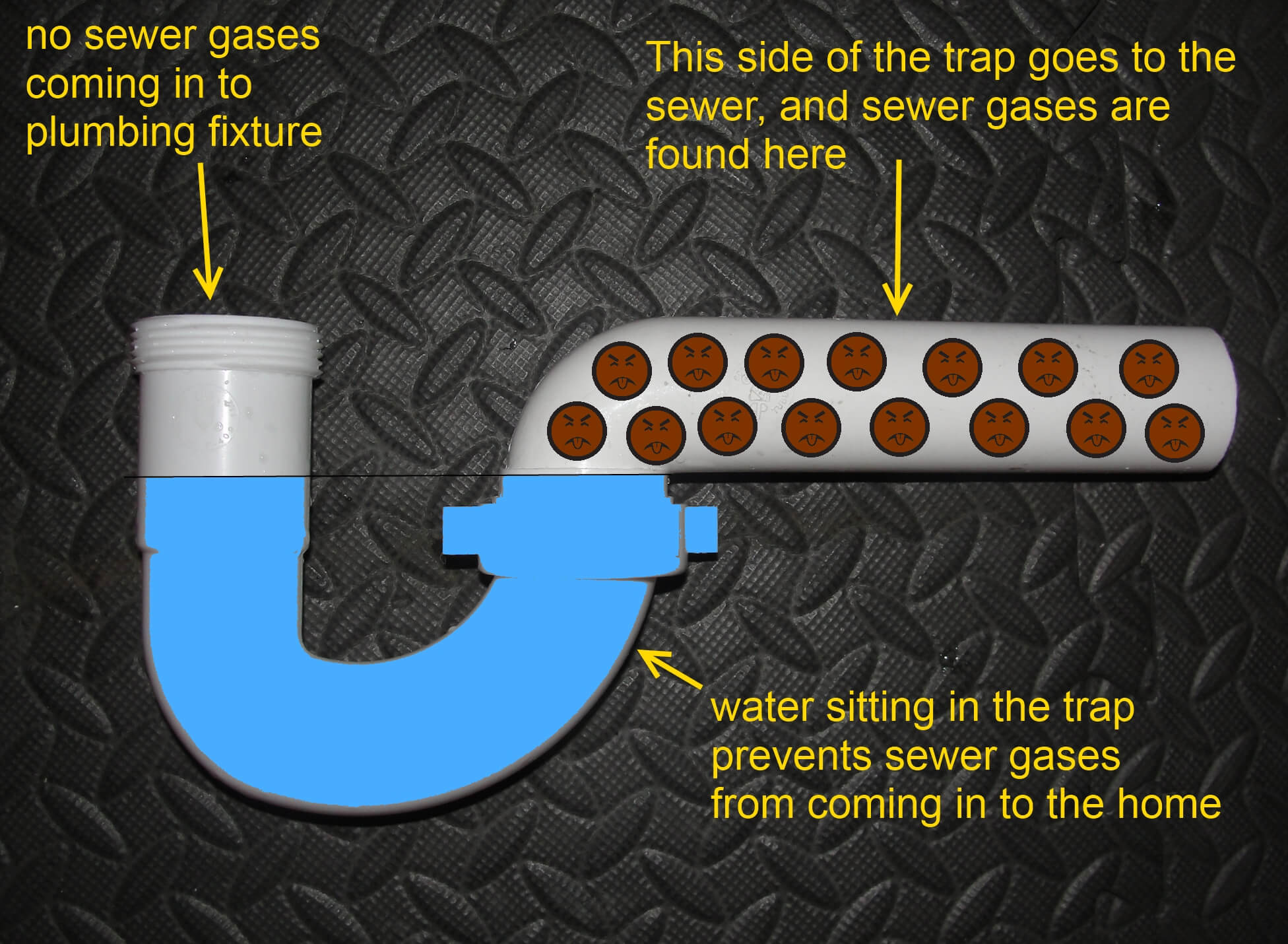
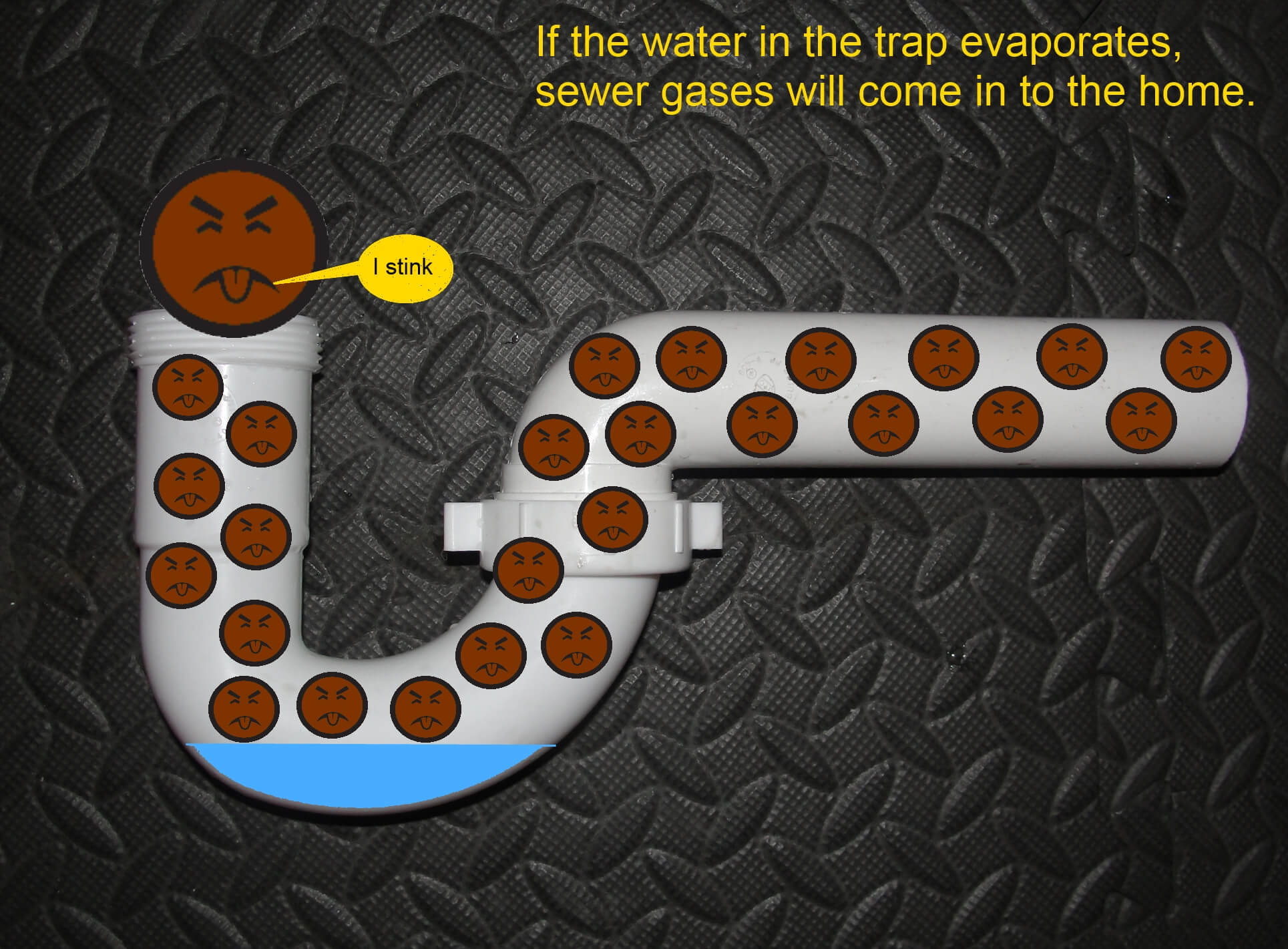
Have you noticed any foul odors in your basement that you just can’t get to the bottom of? It might be sewer gases coming in to your home. Every plumbing fixture needs to be equipped with a trap, which is basically a dip in a pipe that water fills up. This water sitting in the trap is what prevents sewer gases from coming in to your home. The photo below shows a “P-trap” – this is the type of trap you’ll find below sinks, showers, and bath tubs.
P-trap explained
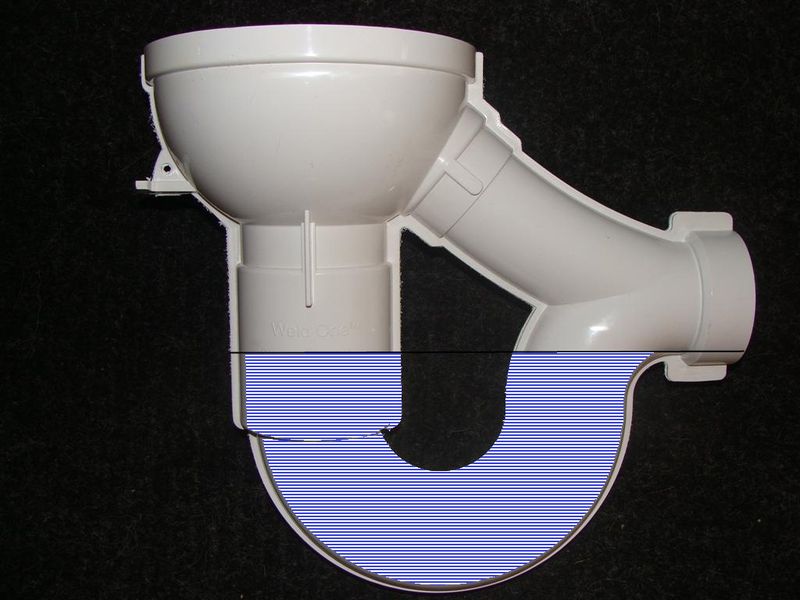
Toilets have their own built in traps, and so do floor drains. The trap on a floor drain is located below the surface of the floor – the photo below shows a floor drain as seen from the side.
Floor Drain
The problem that home inspectors often find in basements is that floor drains or other plumbing fixtures in the basement never have any water flowing to them, so the water in the trap eventually dries out and allows stinky, hazardous sewer gas to come in to the home.
P-trap with no water
Floor drains are the most frequent offenders. If a floor drain doesn’t have water flowing to it on a regular basis, the water in the trap will dry out. A few common things that regularly drain to floor drains and help prevent the traps from drying out are AC condensate drain lines, high efficiency furnace condensate drain lines, humidifier drain lines, dehumidifier drain lines, HRV drain lines, and water softener discharge lines. If you don’t have anything draining to your floor drain on a regular basic, the water in the trap may evaporate.
rv antifreeze
One fix is to pour some RV antifreeze in to the drain. RV antifreeze is cheap, sold everywhere, safe for the environment, and it won’t evaporate. It’s made just for this kind of thing. Another option is to periodically pour some water down the drain; you’ll obviously need to do this on a regular basis, but it’s free and easy to do.
Basement toilets are another frequent offender. These are typically found in old Minneapolis and Saint Paul homes, and it consists of a toilet sitting out in the middle of the basement, with no privacy offered. These toilets don’t get much use, and the water in the bowl eventually dries out.
If you have an abandoned toilet in your basement, have it removed and have the opening to the sewer capped off.
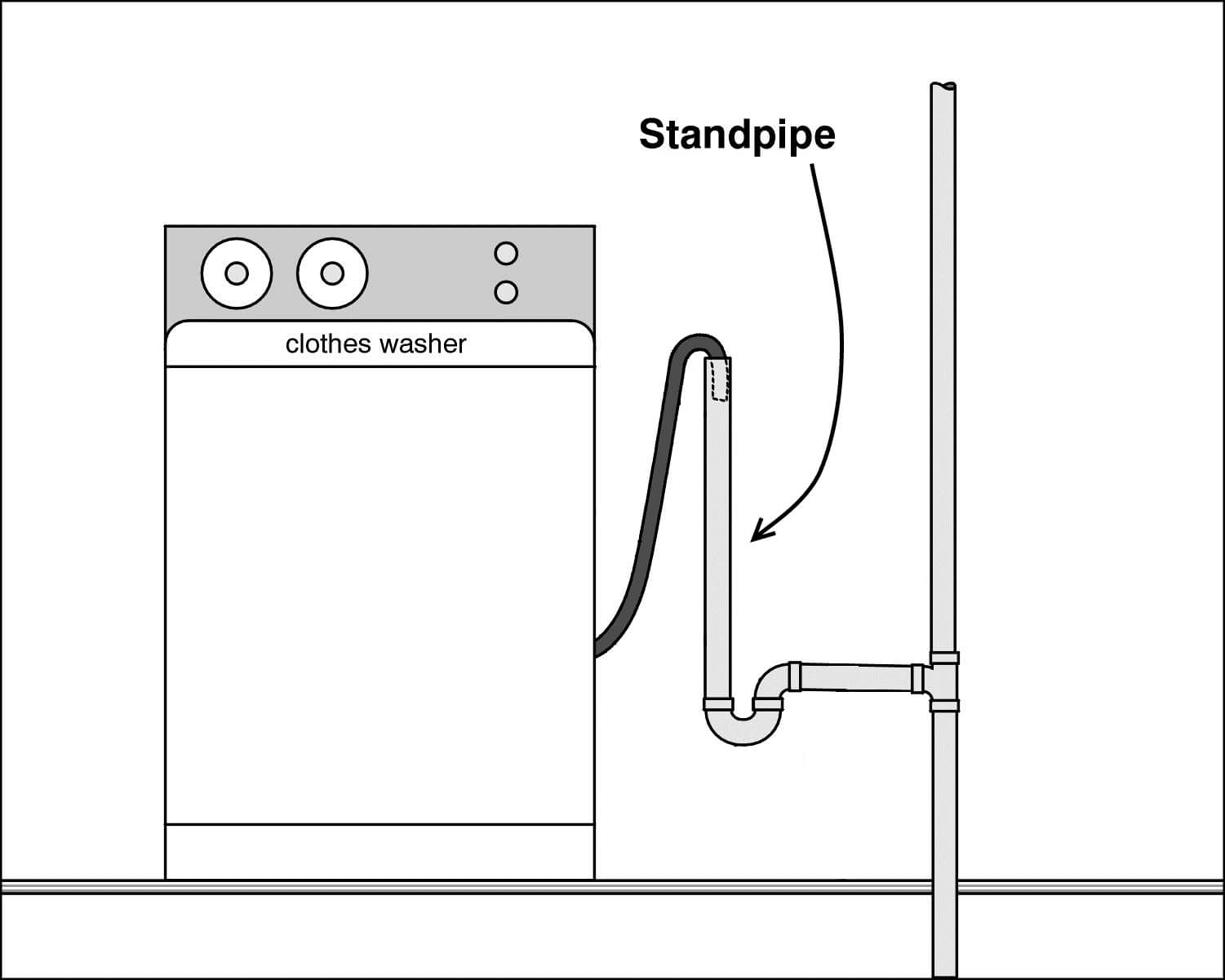
Abandoned standpipes can be another source of sewer gases. A standpipe is a stand-alone trap that typically receives the discharge water from a washing machine. If the washing machine gets moved and is not longer discharging to the standpipe, the water will eventually evaporate.
Standpipe diagram
The fix for an abandoned standpipe is to cap it off or remove it.
Infrequently used bathrooms are the final common offender. In larger homes with guest bathrooms that never get used, the water in the sink, toilet, or tub / shower can evaporate.
As with floor drains, the fix is to pour some RV antifreeze in to the fixtures, or remember to run some water through them every few months. Easy.

Friday, October 5, 2012

Fall Maintenance Checklist for Illinois Homeowners

Fall is officially here. It’s time to get started on your fall maintenance list. It’s much easier working on these projects while it’s still pleasant outside, so don’t put these projects off until the first snow.

Water

  • Disconnect any garden hoses.
  • If the exterior faucets are not frost free, drain the water out. See How to Prevent Your Outside Faucets from Freezing.
  • If you have a lawn sprinkler system, it needs to be drained and blown out with compressed air. Check out local lawn companies, most will do this for a small fee.
  • Drain any exterior fountains.

Air

  • Clean the combustion air or makeup air intake vents.
  • If an air exchange system is present, such as a heat recovery ventilator (HRV), clean it. Regular maintenance items for an HRV include cleaning the exterior intake, the filters, and the core. See HRV maintenance.
  • Clean the clothes dryer duct. The damper at the exterior should move freely and close properly. See dryer duct maintenance.
  • Check the bathroom and kitchen exhaust dampers for wasp nests. The nests will prevent the dampers from openings.

Roof

  • Clean the soffit vents. These can get clogged up with lint, dust, insulation, and paint. They’re located under the roof overhangs.
  • Check the roof vents for bird nests.
  • Clean the gutters after all the leaves have fallen.
  • If the downspouts or sump pumps drain in to an underground system, re-direct them to drain to the ground surface when feasible.

Air Conditioner

  • Outdoor covers are NOT necessary. If a cover is used, it should be the type that only covers the top, not a full enclosure.
  • If the furnace or water heater vent blows exhaust gas on to the air conditioner, a plastic cover can be used to shield the air conditioner from the corrosive exhaust gases.
  • Don’t cover heat pumps (these are not common in Minnesota).

General Exterior

  • Seal any gaps around the house; check for loose or dried out caulking around pipes, ducts, faucets, air conditioner refrigerant lines, etc.
  • Replace any damaged or worn weatherstripping around windows and doors.

Smoke / CO Alarms

  • Smoke alarms should be located inside every bedroom, and one in a common area on every level.
  • CO alarms should be located within ten feet of every sleeping room (and not in furnace rooms, kitchens, or garages).
  • Replace the batteries in your smoke alarms and carbon monoxide alarms and test them using the built-in test buttons.
  • Check the age of your smoke and CO alarms; smoke alarms are good for up to ten years, CO alarms are good for up to seven years. If they’re any older, replace them.

Furnace

  • Have a professional furnace tune-up performed annually.
  • Replace the batteries in your thermostat. If your thermostat fails while you’re on vacation, you might come home to a nasty surprise.
  • Clean or replace the furnace filter - this should usually be done every one to three months, depending on the type of filter. The arrow on the filter should point toward the furnace.

Fireplaces

  • Have the flues professionally cleaned on any wood burning fireplaces if they get used regularly.
  • Avoid burning any woods that are not hard and dry.
  • Clean the dust out of the bottoms of any gas fireplace inserts.
  • If you have a gas log installed in a wood burning fireplace with an adjustable damper, make sure there is a damper stop installed to prevent the damper from getting closed all the way. 
Last but not least, “Cuddle, stay warm, and safe sledding.”