Saturday, October 27, 2012

Mortgage rates hit record low again

NEW YORK (CNNMoney) -- Mortgage rates fell to a new record low after the Federal Reserve's decision to buy billions in home loans continued to ease costs for home owners and buyers.
The average 30-year fixed-rate mortgage fell to an all-time low of 3.36%, according to a weekly survey by mortgage finance backer Freddie Mac. The rate dropped from 3.40% the previous week.
The fixed-rate 15-year mortgage also hit a new record low of 2.69% from 2.73% a week earlier.
Rates have been falling to news lows since the Fed announced last month that it would buy $40 billion in mortgage-backed securities each month. The central bank hopes that keeping interest rates low through this policy, known as quantitative easing, will fuel home buying, which will lead to more spending, and eventually more hiring.

Economists are betting that low mortgage rates would give home buyers the confidence to pay more for homes. Already, home prices have rebounded to the same level they were nine years ago.
There's also been a pick-up in sales of existing homes, a leap in new home sales prices , and an increase in home construction, all of which have invigorated the housing market.
Economists surveyed by CNNMoney said they are encouraged by the reports and believe that the nation's housing market has finally turned a corner.
Of the 14 economists who answered questions about home prices in the survey, nine believed that prices have already turned higher or will make that turn later this year. Only three months ago, half of the economists surveyed by CNNMoney believed a turnaround in prices would not take place until 2013 or later.

@CNNMoneyOctober 4, 2012: 11:03 AM ET    

Did You Know... 6 Facts about Clothes Dryer Exhaust Safety

  1. According to manufacturer’s specifications and local codes, dryer ducts must be a minimum of 4 inches in diameter and at least as large as the dryer outlet.
  2. Unless otherwise specified by the dryer’s manufacturer or local code, the developed length of the dryer’s exhaust duct should not exceed 25 feet. (When determining developed length, each 90 degree turn adds 5 feet to the actual length.)
  3. Dryer vents shall be independent of all other systems and terminate outdoors, not into a chimney, crawl space, or attic.
  4. The outside dryer exhaust vent’s termination hood should be equipped with a back draft damper to ensure that the exhaust doesn’t come back into the home.
  5. Metal transition ducts should be used between the dryer and the exhaust duct.
  6. Flexible transition ducts should never be used in an attic, a crawl space, or inside a wall.
Information provided by the Chimney Safety Institute of America (CSIA) Public Safety Bulletin

Water Heaters That Are Installed in Garages

You may live in an area of the country where the majority of water heaters are located in the garage. It is acceptable to have water heaters in the garage but there are some things that you need to be aware of. The authority on determining what the requirements are for residential water heater installation and safety is the ICC (International Code Council). The following information is taken from the 2009 International Residential Code (IRC) section P2801.6 and P2803.6.1 commentary.
Water heaters having an ignition source shall be elevated so that the source of ignition is not less than 18” above the garage floor. An ignition source could be many things, including an open flame, electrical switch, open resistance heating coils, or an electrical igniter unit. Residential garages have a high potential for volatile liquids, such as gasoline and paint thinners that can spill or leak from their containers. Because the vapors from these liquids are heavier than air, they concentrate just above floor level, posing an explosion hazard in garages with a water heater.
Many electric water heater thermostats have enclosed contacts, but they are not sealed gas tight. Therefore, if an electric water heater with an ignition source located less than 18” from the bottom of the unit, it is required that the unit be elevated so the ignition source (thermostat) is at least 18” above the garage floor. Electric water heaters having all switching controls located above 18” from the bottom of the water heater are not required to be elevated.
Gas-fired appliances have to meet the elevation requirement for elevation above the garage floor, but have an exception to allow gas-fired appliances having flammable vapor ignition resistant (FVIR) design to be installed without elevating the unit.

Friday, October 12, 2012

Why the relief valve at the water heater is leaking, and what to do about it

When a temperature and pressure (T&P) relief valve at a water heater leaks, it’s usually a simple fix; just replace the valve. These valves cost less than $15, and replacing the valve is a very basic job – just drain some water out of the water heater, remove the discharge tube, and replace the valve. No big deal.
Unless it starts leaking again.
If a recently replaced T&P relief valve starts leaking again, it probably means that the relief valve is only doing it’s job; it relieving excess pressure in the water heater. When this happens, the fix gets a little bit more involved. I’ll explain.
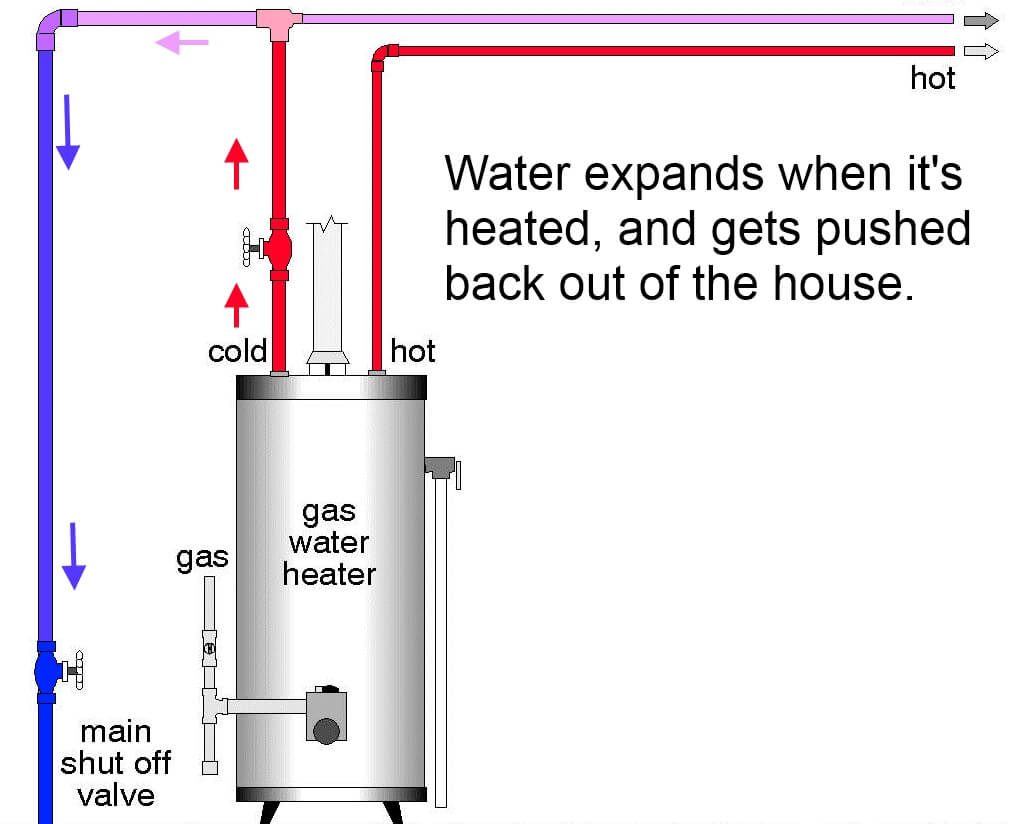
When a water heater heats up the water in the tank, the water expands. When this happens, the water typically ends up expanding back out the cold water inlet, all the way back to the water supply coming in to the house. The municipal water supply for the house acts as a gigantic expansion tank… and nobody notices. This is illustrated in the diagram below.
Natural expansion
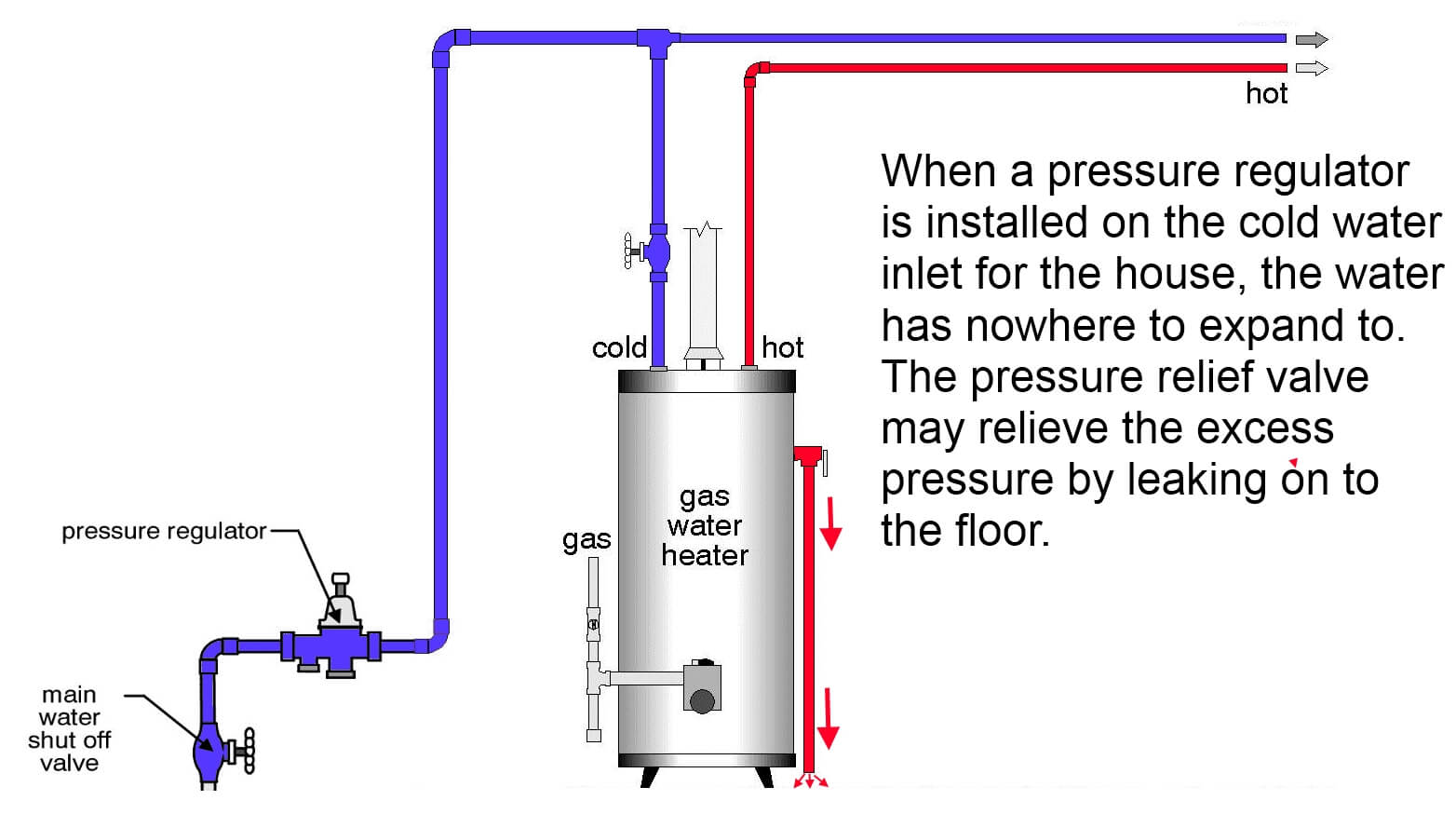
What would happen if a one-way valve, or check valve, was installed on the water supply piping for the house? The water wouldn’t have anywhere to go. As the water heater heats the water, it expands, which builds up pressure in what is now essentially a closed system. When the pressure builds up enough, the T&P relief valve on the water heater just does it’s job and relieves the excess pressure by leaking a little water.
Pressure regulator prevents expansion
In Minnesota it’s rare for a check valve to be installed on the water supply line for the house, but it’s fairly common to have a pressure regulator installed. When the pressure from the water supply coming in to a house is too high, a pressure regulator needs to be installed on the water main, to prevent damage to the plumbing components in the house. The problem that these regulators can create is that they will act as a check valve; they’ll allow water in to the home, but they won’t allow water back out. This creates what is called a ‘closed system’.
When this happens, the T&P relief valve for the water heater can leak. This doesn’t happen every time a pressure reducing valve is installed, but there may be other problems that show up in the house, such as the toilet fill valves randomly re-filling toilets, or faucets chronically dripping.
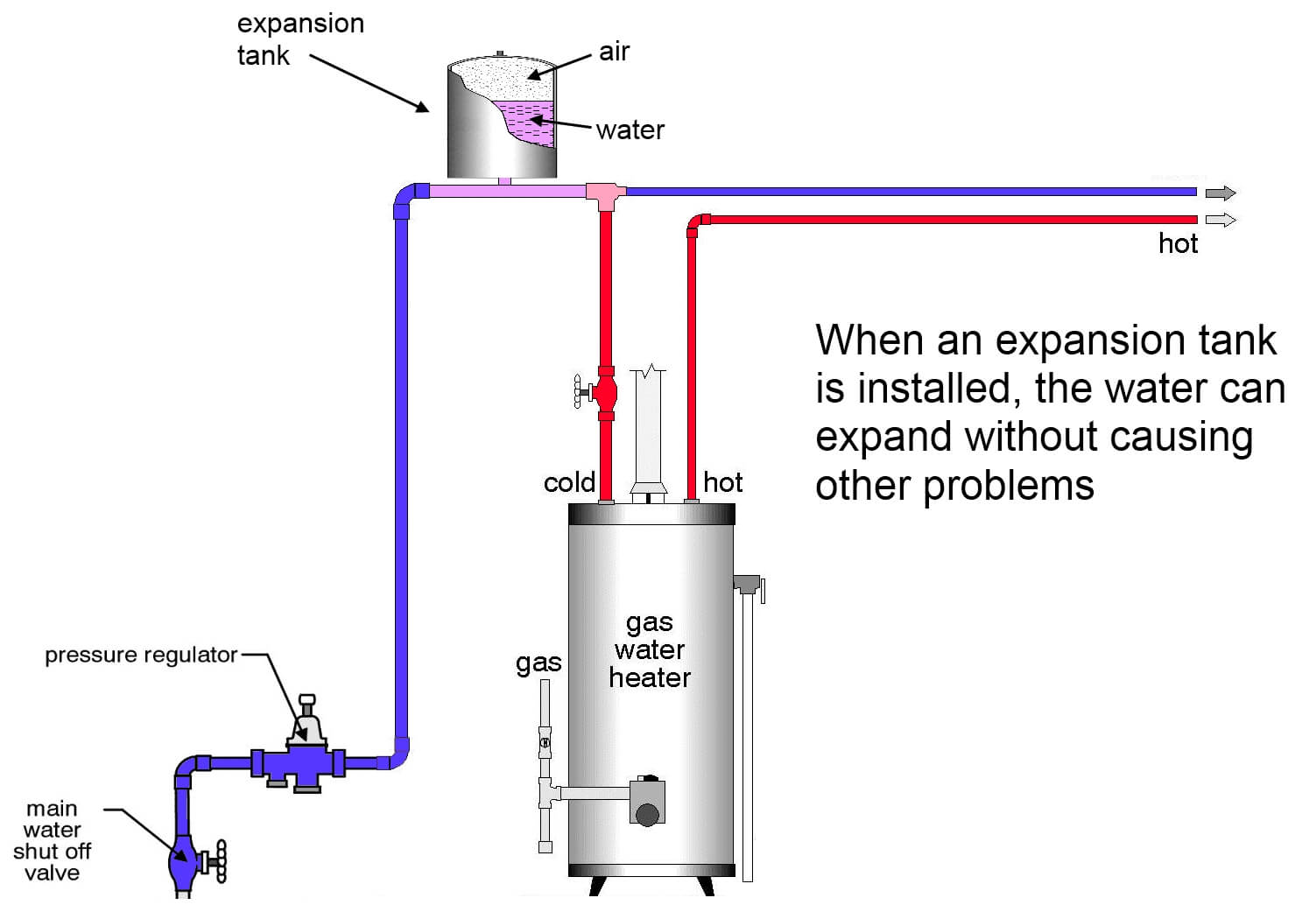
The Fix When a closed system exists on the water distribution piping in a home, an expansion tank needs to be installed somewhere on the plumbing system. This is a fairly simple and straightforward fix; an expansion tank will give the water somewhere to go when it expands, and the T&P relief valve on the water heater will stop causing problems.
Expansion tank installed
This rule also applies to hot water heating systems; when a boiler heats the water in a hydronic heating system, the expansion tank allows for the water to expand without the pressure relief valve leaking. If the pressure relief valve on a boiler system chronically leaks, even after replacement, it probably means there is a problem with the expansion tank.

Plumbing Trap

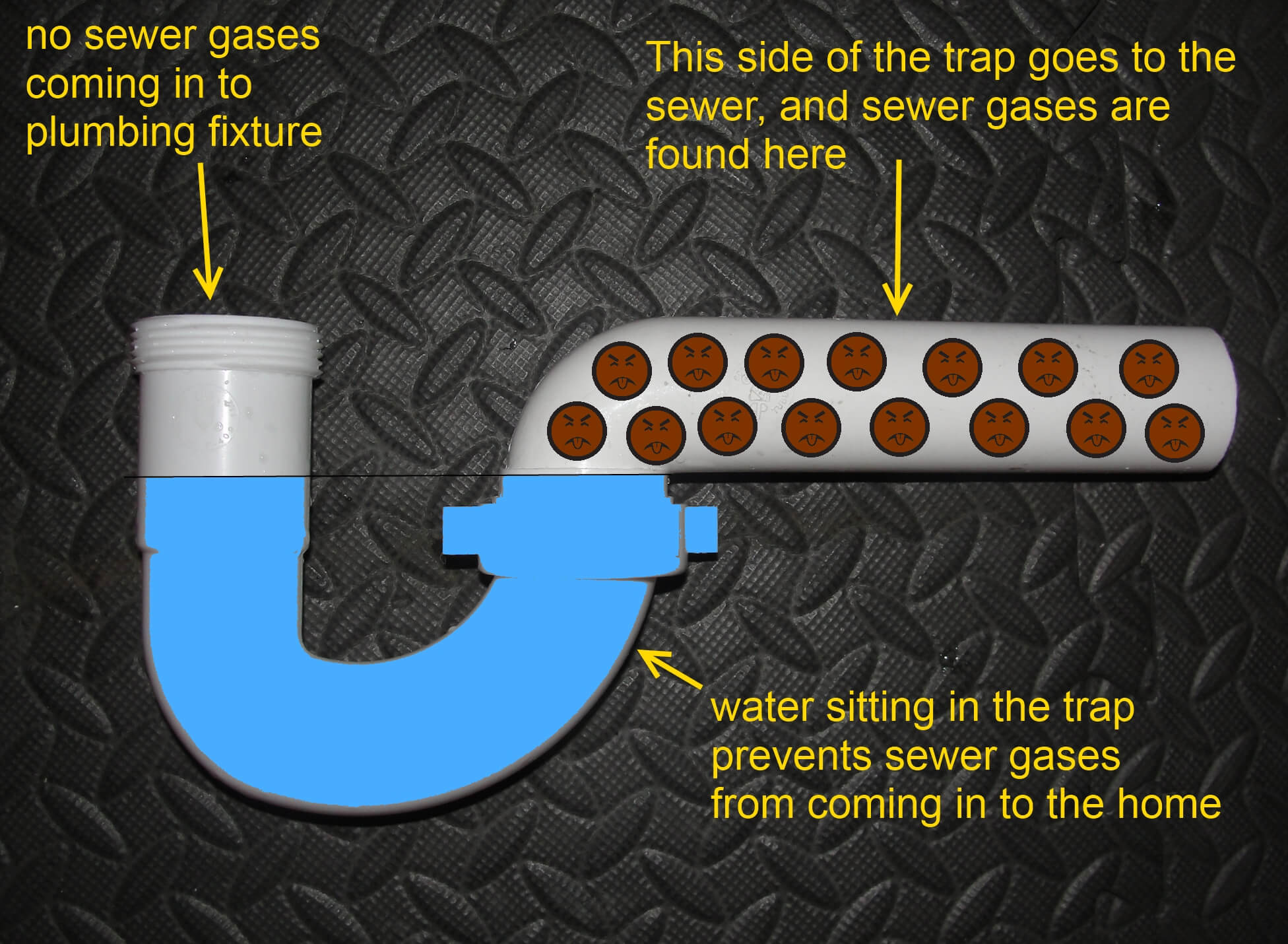
Have you noticed any foul odors in your basement that you just can’t get to the bottom of? It might be sewer gases coming in to your home. Every plumbing fixture needs to be equipped with a trap, which is basically a dip in a pipe that water fills up. This water sitting in the trap is what prevents sewer gases from coming in to your home. The photo below shows a “P-trap” – this is the type of trap you’ll find below sinks, showers, and bath tubs.
P-trap explained
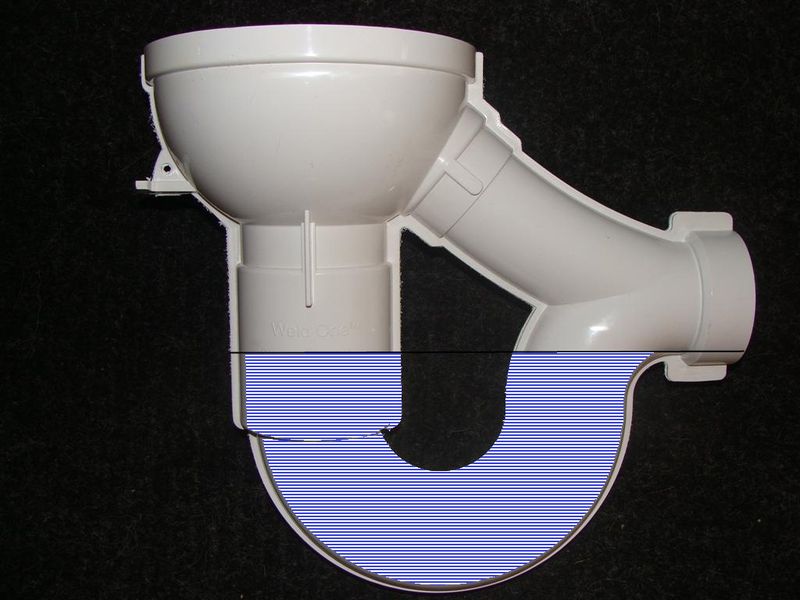
Toilets have their own built in traps, and so do floor drains. The trap on a floor drain is located below the surface of the floor – the photo below shows a floor drain as seen from the side.
Floor Drain
The problem that home inspectors often find in basements is that floor drains or other plumbing fixtures in the basement never have any water flowing to them, so the water in the trap eventually dries out and allows stinky, hazardous sewer gas to come in to the home.
P-trap with no water
Floor drains are the most frequent offenders. If a floor drain doesn’t have water flowing to it on a regular basis, the water in the trap will dry out. A few common things that regularly drain to floor drains and help prevent the traps from drying out are AC condensate drain lines, high efficiency furnace condensate drain lines, humidifier drain lines, dehumidifier drain lines, HRV drain lines, and water softener discharge lines. If you don’t have anything draining to your floor drain on a regular basic, the water in the trap may evaporate.
rv antifreeze
One fix is to pour some RV antifreeze in to the drain. RV antifreeze is cheap, sold everywhere, safe for the environment, and it won’t evaporate. It’s made just for this kind of thing. Another option is to periodically pour some water down the drain; you’ll obviously need to do this on a regular basis, but it’s free and easy to do.
Basement toilets are another frequent offender. These are typically found in old Minneapolis and Saint Paul homes, and it consists of a toilet sitting out in the middle of the basement, with no privacy offered. These toilets don’t get much use, and the water in the bowl eventually dries out.
If you have an abandoned toilet in your basement, have it removed and have the opening to the sewer capped off.
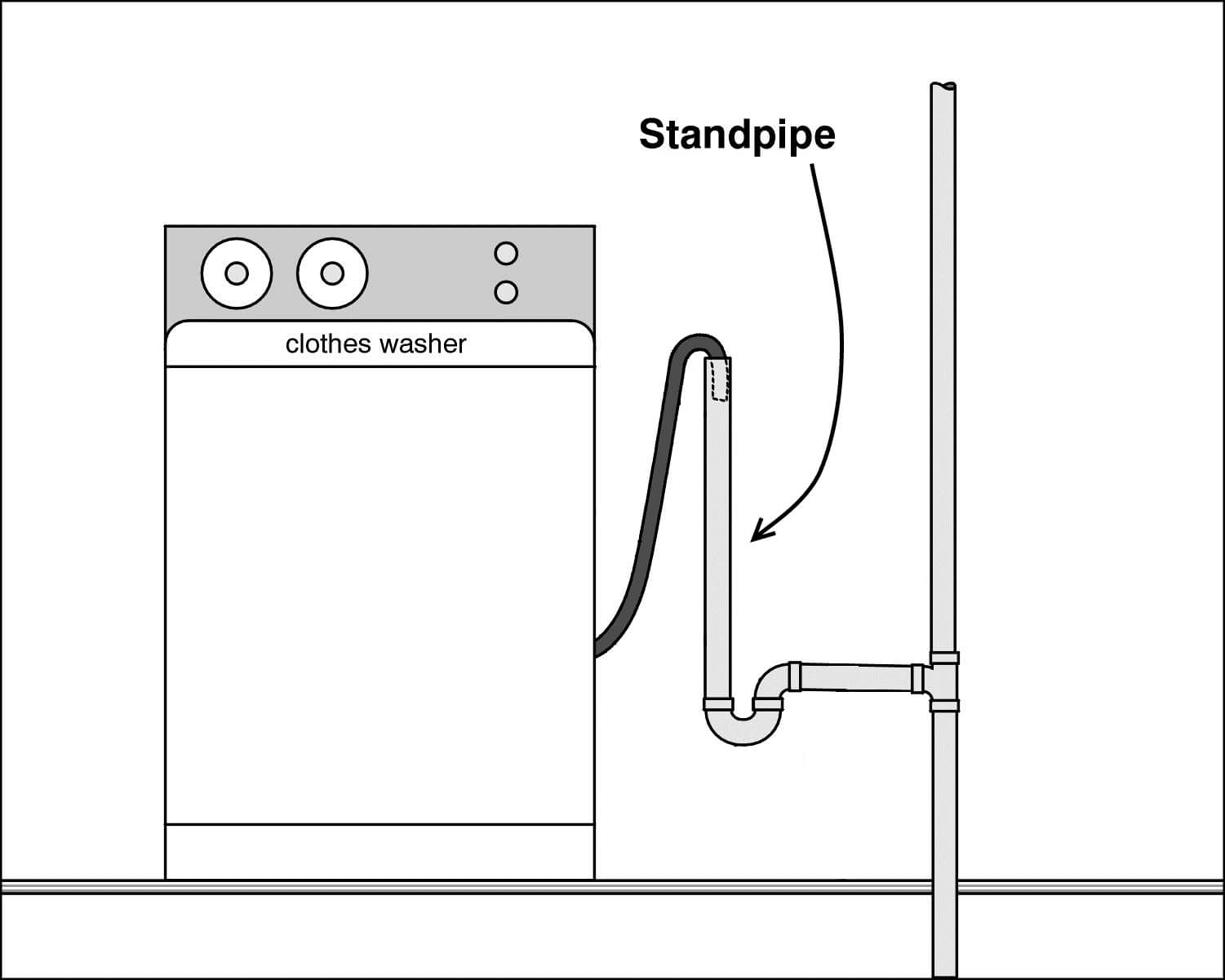
Abandoned standpipes can be another source of sewer gases. A standpipe is a stand-alone trap that typically receives the discharge water from a washing machine. If the washing machine gets moved and is not longer discharging to the standpipe, the water will eventually evaporate.
Standpipe diagram
The fix for an abandoned standpipe is to cap it off or remove it.
Infrequently used bathrooms are the final common offender. In larger homes with guest bathrooms that never get used, the water in the sink, toilet, or tub / shower can evaporate.
As with floor drains, the fix is to pour some RV antifreeze in to the fixtures, or remember to run some water through them every few months. Easy.

Friday, October 5, 2012

Fall Maintenance Checklist for Illinois Homeowners

Fall is officially here. It’s time to get started on your fall maintenance list. It’s much easier working on these projects while it’s still pleasant outside, so don’t put these projects off until the first snow.

Water

  • Disconnect any garden hoses.
  • If the exterior faucets are not frost free, drain the water out. See How to Prevent Your Outside Faucets from Freezing.
  • If you have a lawn sprinkler system, it needs to be drained and blown out with compressed air. Check out local lawn companies, most will do this for a small fee.
  • Drain any exterior fountains.

Air

  • Clean the combustion air or makeup air intake vents.
  • If an air exchange system is present, such as a heat recovery ventilator (HRV), clean it. Regular maintenance items for an HRV include cleaning the exterior intake, the filters, and the core. See HRV maintenance.
  • Clean the clothes dryer duct. The damper at the exterior should move freely and close properly. See dryer duct maintenance.
  • Check the bathroom and kitchen exhaust dampers for wasp nests. The nests will prevent the dampers from openings.

Roof

  • Clean the soffit vents. These can get clogged up with lint, dust, insulation, and paint. They’re located under the roof overhangs.
  • Check the roof vents for bird nests.
  • Clean the gutters after all the leaves have fallen.
  • If the downspouts or sump pumps drain in to an underground system, re-direct them to drain to the ground surface when feasible.

Air Conditioner

  • Outdoor covers are NOT necessary. If a cover is used, it should be the type that only covers the top, not a full enclosure.
  • If the furnace or water heater vent blows exhaust gas on to the air conditioner, a plastic cover can be used to shield the air conditioner from the corrosive exhaust gases.
  • Don’t cover heat pumps (these are not common in Minnesota).

General Exterior

  • Seal any gaps around the house; check for loose or dried out caulking around pipes, ducts, faucets, air conditioner refrigerant lines, etc.
  • Replace any damaged or worn weatherstripping around windows and doors.

Smoke / CO Alarms

  • Smoke alarms should be located inside every bedroom, and one in a common area on every level.
  • CO alarms should be located within ten feet of every sleeping room (and not in furnace rooms, kitchens, or garages).
  • Replace the batteries in your smoke alarms and carbon monoxide alarms and test them using the built-in test buttons.
  • Check the age of your smoke and CO alarms; smoke alarms are good for up to ten years, CO alarms are good for up to seven years. If they’re any older, replace them.

Furnace

  • Have a professional furnace tune-up performed annually.
  • Replace the batteries in your thermostat. If your thermostat fails while you’re on vacation, you might come home to a nasty surprise.
  • Clean or replace the furnace filter - this should usually be done every one to three months, depending on the type of filter. The arrow on the filter should point toward the furnace.

Fireplaces

  • Have the flues professionally cleaned on any wood burning fireplaces if they get used regularly.
  • Avoid burning any woods that are not hard and dry.
  • Clean the dust out of the bottoms of any gas fireplace inserts.
  • If you have a gas log installed in a wood burning fireplace with an adjustable damper, make sure there is a damper stop installed to prevent the damper from getting closed all the way. 
Last but not least, “Cuddle, stay warm, and safe sledding.”

Aluminum Branch Wiring

While the hazards associated with aluminum branch circuit conductors in homes have been known about for the last 40 years, there still seems to be a lot of disagreement about what should be done when aluminum branch circuit conductors are found during a home inspection. 
For the record, “Aluminum branch circuit conductors” refers to wires that provide power to 15 and 20 amp circuits in houses. It’s the wire that connects to outlets, switches, lights, and the like. For the rest of this blog, I’m going to call it aluminum wiring, but I’m not referring to the aluminum wiring that is commonly used on 240 volt circuits or service drops on today’s homes. That stuff is fine.
Just in case you’re unfamiliar with aluminum wiring, here are a few key points:
  • Aluminum wiring starting being used in single family homes as a replacement for copper wiring around 1965.
  • Between 1965 and 1972, over two million homes were wired with aluminum.
  • Many homes caught fire and people died as a result of the aluminum wiring causing fires.
  • The Franklin Research Institute determined that pre-1972 homes wired with aluminum were more likely to reach “fire hazard conditions” than homes wired with copper. Not twice as likely, not ten times more likely, but 55 times more likely.
  • Aluminum wiring failed at the connection points, such as splices between wires, connections at outlets, circuit breakers, switches, lights, etc.
  • In 1972, the formula for aluminum wiring changed, making it a much safer product. Aluminum wiring was used in single family homes for a few years after that, but was completely phased out by the mid-70′s.
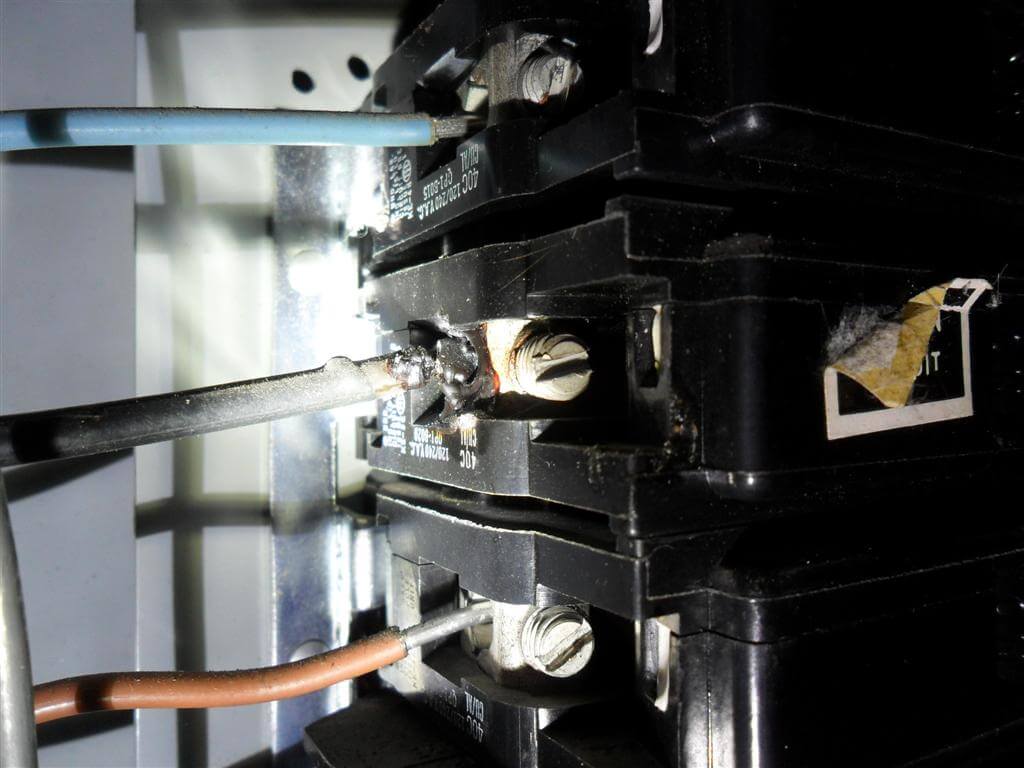
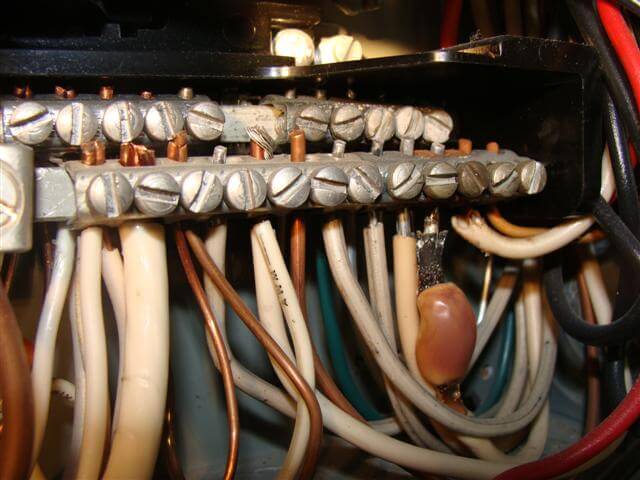
I’ve never inspected a home that was actually on fire because of poor connections at the aluminum wiring, but I’ve seen a few that looked like they were close.
Melted wire
Scorched Aluminum conductor
There’s a persistent myth that if a home was wired with aluminum over 40 years ago and it hasn’t burned down yet, it’s never going to. Of course, that’s just plain silly.
While there are plenty of houses with aluminum wiring that haven’t started on fire, this doesn’t mean they’re safe. The current occupants haven’t burned the house down, but when the new owners move in, will they put different demands on the system? Of course. With a change in occupancy comes a change in use, and that’s when problems often show up.
If you’re buying a home with aluminum wiring, my advice is to have a thorough inspection of the wiring performed by an electrician and repairs made if needed. This inspection would require the inspection of at least a representative number of connections. This means pulling outlets out of the wall, pulling switches out of the wall, taking lights down to inspect the connections, pulling wires out of junction boxes, etc. If any connections aren’t proper, repairs should be made.

Wednesday, October 3, 2012

Smoke Detectors and Smoke Detector Location

A properly installed and maintained smoke alarm is the only thing in your home that can alert you and your family to a fire 24 hours a day, seven days a week. Industry experts at the NFPA have determined that in a typical home fire, you only have three minutes to escape. There are many different brands of smoke alarms available on the market, but they fall under two basic types: ionization and photoelectric. Dual sensor smoke alarms are combination smoke alarms that combine ionization and photoelectric into one unit.
Ionization smoke detection is generally more responsive to flaming fires. Ionization-type smoke alarms have a small amount of radioactive material between two electrically charged plates, which ionizes the air and causes current to flow between the plates. When smoke enters the chamber, it disrupts the flow of ions, thus reducing the flow of current and activating the alarm. Sources of these fires may include flammable liquids or paper burning in a waste container. Most smoke alarms in use are of this type.
A photoelectric type smoke alarm consists of a light emitting diode and a light sensitive sensor in the sensing chamber. The presence of suspended products of combustion in the chamber scatters the light beam. This scattered light is detected and sets off the alarm. Sources of these fires may include cigarettes burning in couches or bedding.
Placement of smoke detectors is also very important. Home inspectors should be aware that according to the IRC 2009 smoke detectors should be installed in each sleeping room, outside each separate sleeping area in the immediate vicinity of the bedrooms and on each additional story of the dwelling , including basements and habitable attics but not including crawl spaces and uninhabitable attics. In new construction, minimum requirements are typically more stringent. All smoke detectors must be hooked directly to the electrical wiring, be interconnected and have a battery backup.
If the smoke alarm is battery powered, it will run on either a disposable 9-volt battery or a non-replaceable 10-year lithium battery. These batteries must be tested on a regular basis and, in most cases should be replaced at least once each year (except for lithium batteries).

Thursday, September 27, 2012

Closed Cell vs. Open Cell Foam


There are many different types of Spray Foams available in the marketplace that you will find on during a home inspection.  You will hear terms like open cell (½ lb) and closed cell (2 lb) foam.  We will discuss these terms to give you a better understanding as a home inspector on what to look for in each type.
In a closed-cell foam, the gas forms discrete pockets, each completely surrounded by the solid material. In an open-cell foam, the gas pockets connect with each other.  An example of open-cell foam is a bath sponge.
Open-cell or ½ lb foams have an R-value of about 3.7 per inch and require a vapor retarder as dictated by local building codes and climate.  Open-cell foams are easily identified by their soft spongy surface.  Closed-cell or 2 lb foams have an R-value in the mid 6 per inch and generally do not require a vapor retarder.  Closed-cell foams typically have a hard “crust” on their surface.
There are also many “Green” types of foam on the market, soy foam, corn foam, sugar foam, etc.  They make it seem as though the product is completely Green.  In real life the Green component is about 5-8% of the Component B while all of them still have the nasty petroleum based Component A, MDI (methylene diphenyl diisocyanate).
Open-cell is less durable and must be used inside only.  Closed-cell is more durable, has a greater R-value per inch, and adds structural rigidity in most applications.  In either case when used in wall and ceiling cavities virtually all applications must be covered with ½ inch drywall or an intumescent coating as a thermal / ignition barrier.  When used in an attic application (vented or unvented) many closed-cell products can be left uncovered.
With all of the differences and benefits of closed-cell foam you can imagine that it costs more than open-cell foam and it generally does.
One common application currently being used is “flash and batt” which involves spraying about 1-2 inches of foam on the walls (backside of sheathing) then insulating with standard fiberglass batts.  There is a potential problem with this procedure in cold climates with too thin of foam.  Condensation may form in the wall cavity on the surface of the foam since the warm humid air within the home will move right through the fiberglass until it meets the cool surface of the foam.  Be sure to check manufacturer’s recommendations for proper installation.

Tuesday, September 25, 2012

Arc Fault Circuit Interrupters = Lifesavers

The AFCI breaker performs a different job entirely from GFIs, Ground Fault Interrupter (GFCI) breakers and outlets. A GFI protects a home inspector from becoming part of the circuit and getting a shock. The AFCI breaker protects you and your house from a fire.
According to the U.S.F.A ,during a typical year, home electrical problems account for 26,100 fires and $1 billion in property losses. About half of all residential electrical fires involve electrical wiring.
Arc fault circuit interrupters (AFCIs) involve a technology that detects arcing-faults in electrical circuits that could cause fires. By recognizing characteristics unique to arcing and functioning to de-energize the circuit when an arc-fault is detected, AFCIs further reduce the risk of fire beyond the scope of conventional fuses and circuit breakers.
Conventional circuit breakers only respond to overloads and short circuits; so they do not protect against arcing conditions that produce erratic, and often reduced current. An AFCI is selective so that normal arcs do not cause it to trip. The AFCI circuitry continuously monitors the current and discriminates between normal and unwanted arcing conditions. Once an unwanted arcing condition is detected, the AFCI opens its internal contacts, thus de-energizing the circuit and reducing the potential for a fire to occur. An AFCI should not trip during normal arcing conditions, which can occur when a switch is opened or a plug is pulled from a receptacle.
 

Friday, September 21, 2012

Home & Real Estate Industry Trends: Homes Selling More Quickly

A new measure shows the typical amount of time it takes to sell a home is shrinking, and for traditional sellers is now in the range of historic norms for a balanced market, well below the cyclical peak reached in 2009, according to the National Association of Realtors®.
The median time a home was listed for sale on the market1 was 69 days in July, down 29.6 percent from 98 days in July 2011. The median reflects a wide spectrum; one-third of homes purchased in July were on the market for less than a month, while one in five was on the market for at least six months.
Lawrence Yun, NAR chief economist, said there is a clear relationship between inventory supply and time on market. “As inventory has tightened homes have been selling more quickly,” he said. “A notable shortening of time on market began this spring, and this has created a general balance between home buyers and sellers in much of the country. This equilibrium is supporting sustained price growth, and homes that are correctly priced tend to sell quickly, while those that aren’t often languish on the market.”
At the end July there was a 6.4-month supply of homes on the market at the current sales pace, which is 31.2 percent below a year ago when there was a 9.3-month supply.
There are consistent and related findings between annual consumer research in NAR’s Profile of Home Buyers and Sellers, and sets of data in the existing-home sales series, that show current market conditions are comparable with median selling time in balanced markets.
In periods where the existing-home sales series averaged close to a 6-month supply of homes in listed inventory, which is near the low end for market equilibrium, the home buyer and seller series showed a median selling time of just over six weeks.

Thursday, September 20, 2012

Answering Those Questions Pt. 2

Here are some more answers to the questions I receive, being a home inspector.

Q. CAN A HOUSE FAIL INSPECTION?
No. A professional home inspection is an examination of the current condition of your prospective home. It is not an appraisal, which determines market value, or a municipal inspection, which verifies local code compliance. A home inspector, therefore, will not pass or fail a house, but rather describe its physical condition and indicate what may need repair or replacement.
Q. WHEN DO I CALL IN THE HOME INSPECTOR?
A home inspector is typically contacted right after the contract or purchase agreement has been signed, and is often available within a few days. However, before you sign, be sure that there is an inspection clause in the contract, making your purchase obligation contingent upon the findings of a professional home inspection. This clause should specify the terms to which both the buyer and seller are obligated.
Q. DO I HAVE TO BE THERE?
It is not necessary for you to be present for the inspection. You will be able to observe the inspector and ask questions directly, as you learn about the condition of the home, how its systems work, and how to maintain it. You will also find the written report easier to understand if you've seen the property first-hand through the inspector's eyes.
Q. WHAT IF THE REPORT REVEALS PROBLEMS?
No house is perfect. If the inspector identifies problems, it doesn't necessarily mean you shouldn't buy the house, only that you will know in advance what to expect. A seller may adjust the purchase price or contract terms if major problems are found. If your budget is tight, or if you don't wish to become involved in future repair work, this information will be extremely important to you.
Q. IF THE HOUSE PROVES TO BE IN GOOD CONDITION, DID I REALLY NEED AN INSPECTION?
Definitely, now you can complete your home purchase with your eyes open as to the condition of the property and all its equipment and systems. You will also have learned many things about your new home from the inspector's written report, and will want to keep that information for future reference.

Answering Those Questions


As a home inspector, I get a lot of questions regarding the process. So I;ve decided to spend the first few posts answering these questions. I want everyone to have a base understanding of what I do and how I do it. So lets get things rolling.


Q. WHAT IS A "HOME INSPECTION"?

A home inspection is an objective visual examination of the physical structure and systems of a home, from the roof to the foundation. Having a home inspected is like giving it a physical check-up. If problems or symptoms are found, the inspector may recommend further evaluation.

Q. WHAT DOES IT INCLUDE?

My inspection report will review the condition of the home's heating system, central air conditioning system (temperature permitting), interior plumbing and electrical systems; the roof, attic, and visible insulation; walls, ceilings, floors, windows and doors; the foundation, basement, and visible structure.

Q. WHY DO I NEED A HOME INSPECTION?

The purchase of a home is probably the largest single investment you will ever make. You should learn as much as you can about the condition of the property and the need for any major repairs before you buy, so that you can minimize unpleasant surprises and difficulties afterwards.

Of course, a home inspection also points out the positive aspects of a home, as well as the maintenance that will be necessary to keep it in good shape. After the inspection, you will have a much clearer understanding of the property you are about to purchase.

If you are already a home owner, a home inspection may be used to identify problems in the making and to learn preventive measures which might avoid costly future repairs. If you are planning to sell your home, you may wish to have an inspection prior to placing your home on the market. This will give you a better understanding of conditions which may be discovered by the buyer's inspector, and an opportunity to make repairs that will put the house in better selling condition.

Q. WHAT WILL IT COST?

The inspection fee for a typical one-family house varies upon the size of the residence, as does the cost of housing. Similarly the inspection fee may vary depending upon particular features of the house and/or out buildings.

However, do not let cost be a factor in deciding whether or not to have a home inspection, or in the selection of your home inspector. The knowledge gained from an inspection is well worth the cost, and the lowest-priced inspector is not necessarily a bargain. The inspector's qualifications, including his experience, training, and professional affiliations, should be the most important consideration.

Q. CAN I DO IT MYSELF?

Even the most experienced home owner lacks the knowledge and expertise of a professional home inspector who has inspected hundreds, perhaps thousands, of homes in his or her career. An inspector is familiar with the many elements of home construction, their proper installation, and maintenance. He or she understands how the home's systems and components are intended to function together, as well as how and why they fail.

Above all, most buyers find it very difficult to remain completely objective and unemotional about the house they really want, and this may affect their judgment. For the most accurate information, it is best to obtain an impartial third-party opinion by an expert in the field of home inspection.
Keep an eye out in a day or two for more questions answered!

Wednesday, September 19, 2012

Welcome

Heartland Home Inspections provides home inspections in Southern Illinois, we understand that your home is your most important purchase you'll ever make. We aim to provide all of our clients with the highest level of experience and professional service as possible. Making us your #1 choice when choosing a home inspector.
Our philosophy is to inspect each home with the utmost care, to be thorough, and to explain our findings clearly to each client. We are licensed and insured home inspectors, with many years of experience in countruction and inspecting.
Whether you need a pre-purchase, pre-list, or general home inspection, a Heartland Home Inspection inspector is available to discuss how our services can meet your needs. Our impartial and experienced inspectors can help you make an educated real estate investment.