For the record, “Aluminum branch circuit conductors” refers to wires that provide power to 15 and 20 amp circuits in houses. It’s the wire that connects to outlets, switches, lights, and the like. For the rest of this blog, I’m going to call it aluminum wiring, but I’m not referring to the aluminum wiring that is commonly used on 240 volt circuits or service drops on today’s homes. That stuff is fine.Just in case you’re unfamiliar with aluminum wiring, here are a few key points:
- Aluminum wiring starting being used in single family homes as a replacement for copper wiring around 1965.
- Between 1965 and 1972, over two million homes were wired with aluminum.
- Many homes caught fire and people died as a result of the aluminum wiring causing fires.
- The Franklin Research Institute determined that pre-1972 homes wired with aluminum were more likely to reach “fire hazard conditions” than homes wired with copper. Not twice as likely, not ten times more likely, but 55 times more likely.
- Aluminum wiring failed at the connection points, such as splices between wires, connections at outlets, circuit breakers, switches, lights, etc.
- In 1972, the formula for aluminum wiring changed, making it a much safer product. Aluminum wiring was used in single family homes for a few years after that, but was completely phased out by the mid-70′s.
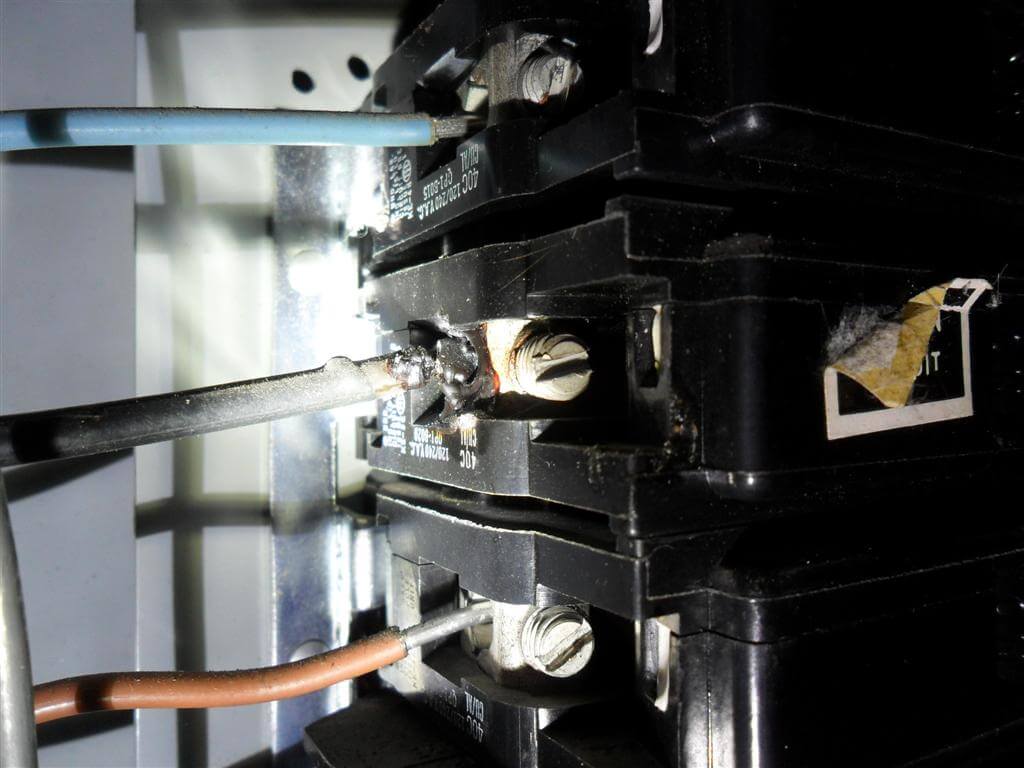
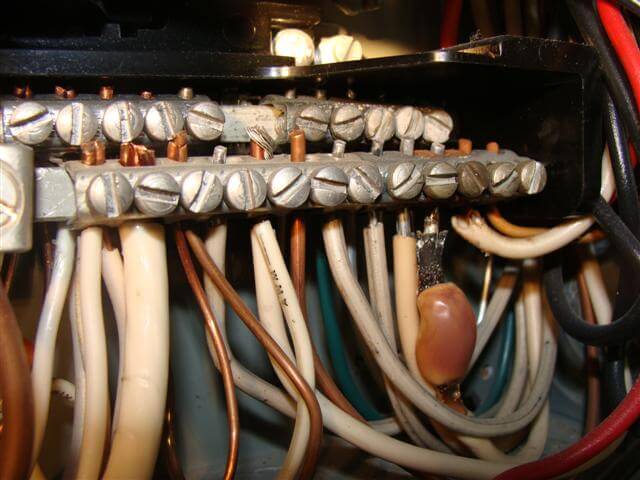
There’s a persistent myth that if a home was wired with aluminum over 40 years ago and it hasn’t burned down yet, it’s never going to. Of course, that’s just plain silly.
While there are plenty of houses with aluminum wiring that haven’t started on fire, this doesn’t mean they’re safe. The current occupants haven’t burned the house down, but when the new owners move in, will they put different demands on the system? Of course. With a change in occupancy comes a change in use, and that’s when problems often show up.
If you’re buying a home with aluminum wiring, my advice is to have a thorough inspection of the wiring performed by an electrician and repairs made if needed. This inspection would require the inspection of at least a representative number of connections. This means pulling outlets out of the wall, pulling switches out of the wall, taking lights down to inspect the connections, pulling wires out of junction boxes, etc. If any connections aren’t proper, repairs should be made.

No comments:
Post a Comment